Traditional vs AI Food Photography: Cost, Time & Quality Comparison
 Ali Tanis7/31/20256 min read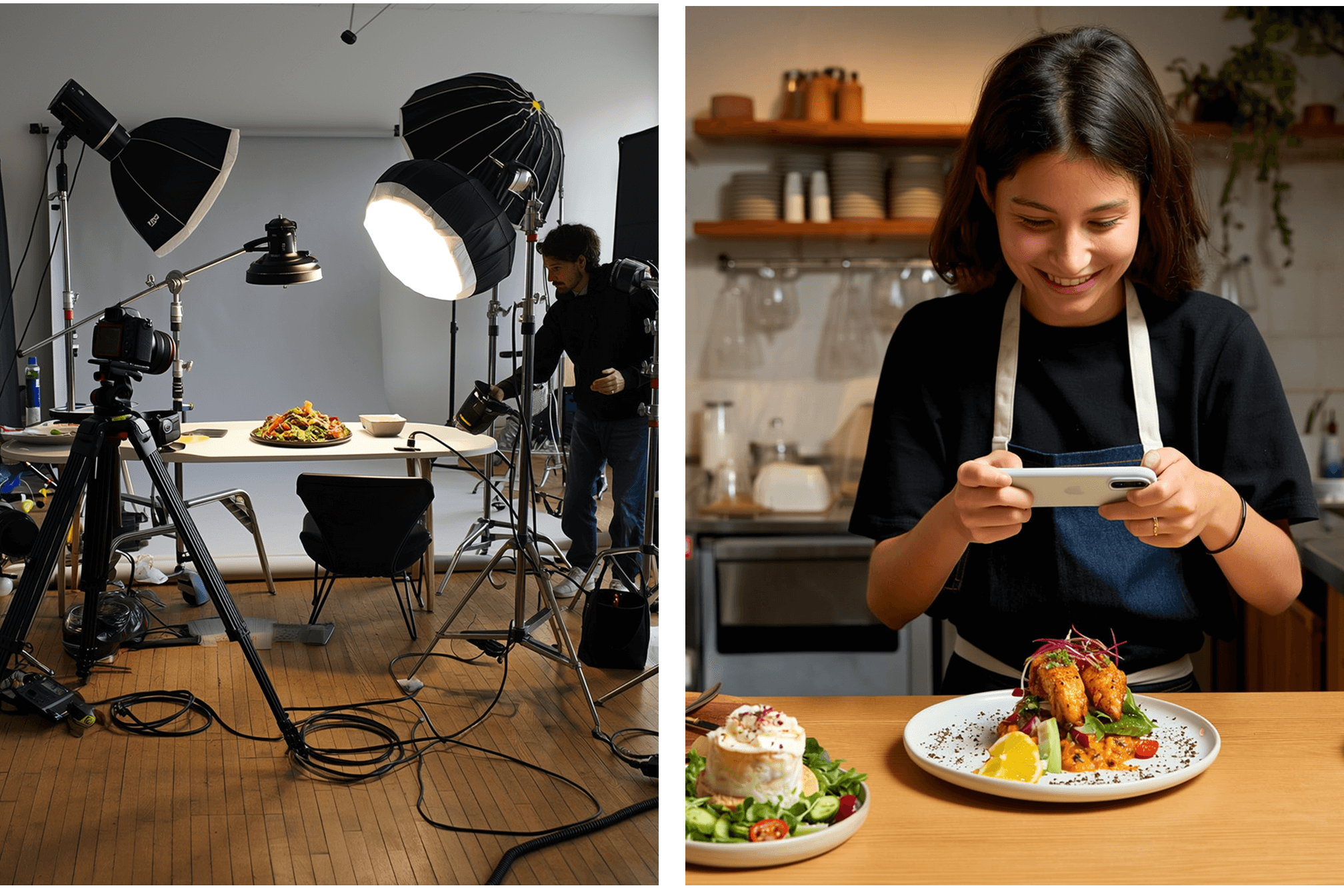
Traditional vs AI Food Photography: Cost, Time & Quality Comparison
If you've ever tried to update your restaurant's menu photos, you know the struggle. The photographer arrives, sets up for hours, and by the time they're ready to shoot, your perfectly plated dish is starting to wilt.
This is the reality of traditional food photography that many restaurant owners face daily. Let's explore what's really involved and how new AI food photography solutions compare.
What Traditional Food Photography Really Involves
When you hire a food photographer, you're not just paying for someone to click a button. The process is surprisingly complex:
The Setup Phase (2-4 hours)
- Unloading equipment - cameras, lenses, lights, reflectors
- Finding the perfect spot with natural light
- Setting up backgrounds and props
- Testing different angles and compositions
The Actual Shoot
- Preparing each dish fresh for the camera
- Racing against time before food loses its appeal
- Multiple takes to get the perfect shot
- Constant adjustments for changing light conditions
Post-Production (3-5 days)
- Sorting through hundreds of photos
- Color correction and editing
- Removing imperfections
- Delivering final images
Most food photographers charge extra for rush delivery or additional edits.
The Hidden Challenges Nobody Talks About
Food Spoilage During Shoots
Here's what happens during a typical photo session:
- Ice cream melts within 5 minutes under lights
- Salads wilt after 15-20 minutes
- Hot dishes lose steam and appeal quickly
- Sauces dry out and lose their shine
Many food photographers use tricks like motor oil instead of syrup or mashed potatoes instead of ice cream. But for restaurants showing actual menu items, this isn't an option.
The Background Consistency Problem
One of the biggest challenges in traditional food photography is maintaining visual consistency:
- Different shooting days mean different lighting
- Props and backgrounds may not be available
- Seasonal changes affect natural light
- Different food photographers have different styles
This inconsistency can make your menu look unprofessional, even with high-quality individual photos.
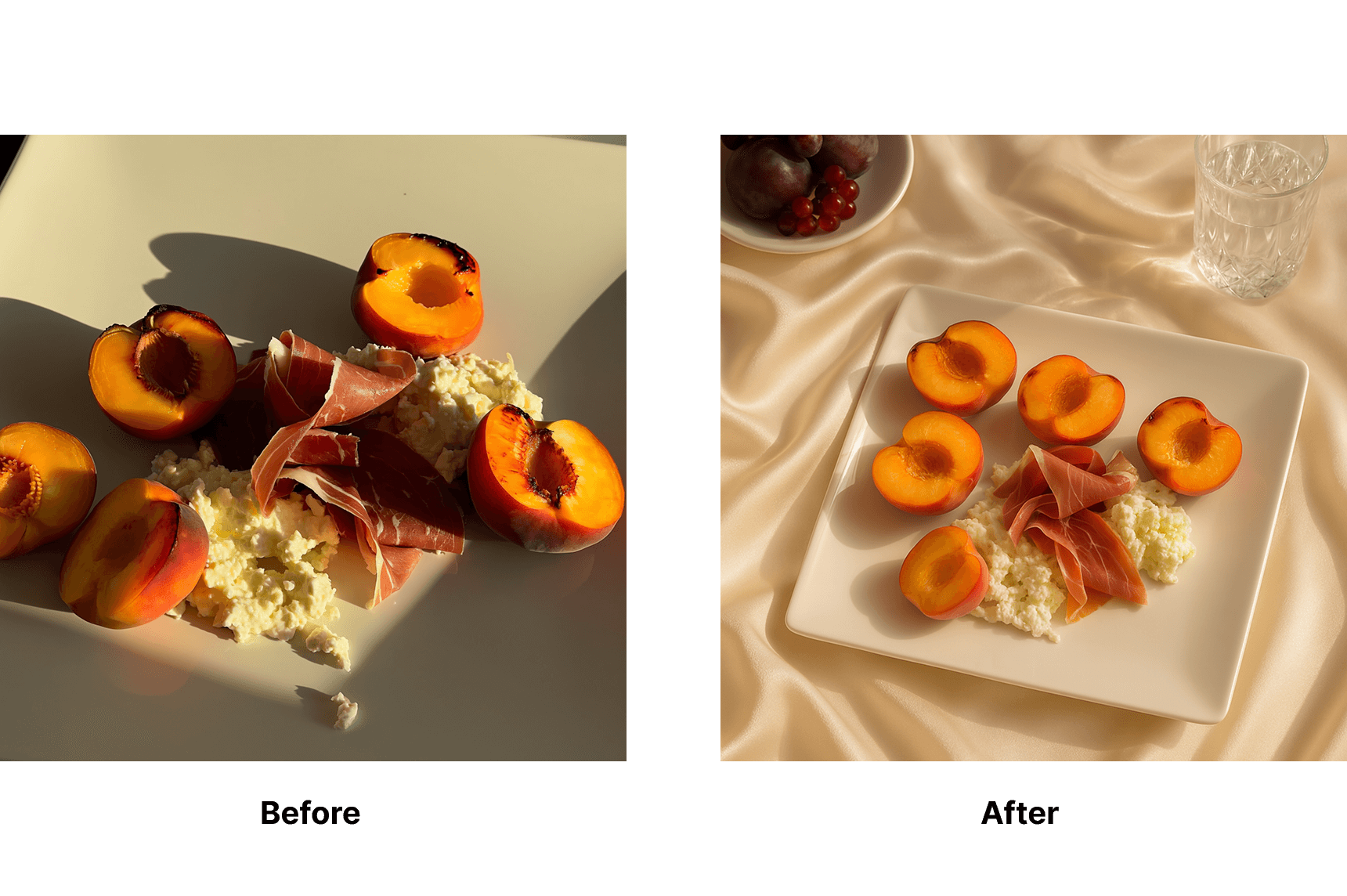
Generated by FoodShot AI
Limited Creative Options
With traditional photography, you're limited by:
- Available props and backgrounds
- Physical space constraints
- Time and budget for multiple setups
- Weather and lighting conditions
Want to show your burger in 10 different settings? That's 10 different setups, hours of work, and significant additional food photography cost.
Enter AI Food Photography
AI food photography uses advanced algorithms to enhance and transform food images. But what does this mean practically?
How It Works: 1. Upload a simple photo of your dish 2. AI analyzes composition, lighting, and food elements 3. Applies professional photography principles 4. Generates multiple variations in seconds
The key difference: AI preserves your actual food while enhancing its presentation. Learn more about how AI food photography works.
Real-World Comparison: Traditional vs AI
Let's look at what each approach offers for everyday restaurant needs, including restaurant photography pricing:
| Aspect | Traditional Photography | AI Food Photography |
|---|---|---|
| Time to Result | 3-7 days | ✓ 120 seconds |
| Consistency | Varies by shoot | ✓ Always consistent |
| Background Options | Limited to available props | ✓ Unlimited variations |
| Food Freshness | Must work quickly | ✓ No time pressure |
| Cost per Image | $150-500 | ✓ $0.60 |
| Reshoots | Full session needed | ✓ Instant regeneration |
The Cost Reality That Changes Everything
Annual Cost Comparison (Starter Plan - 25 photos/month):
- Traditional Photography: $3,750-$12,500 per year (25 photos × $150-500)
- AI Food Photography: $108 per year (Starter plan - annual)
- You Save: $3,642-$12,392 annually
That's not just savings – that's 2 months of rent for many restaurants. Or a part-time employee's salary. Or your entire marketing budget for social media ads.
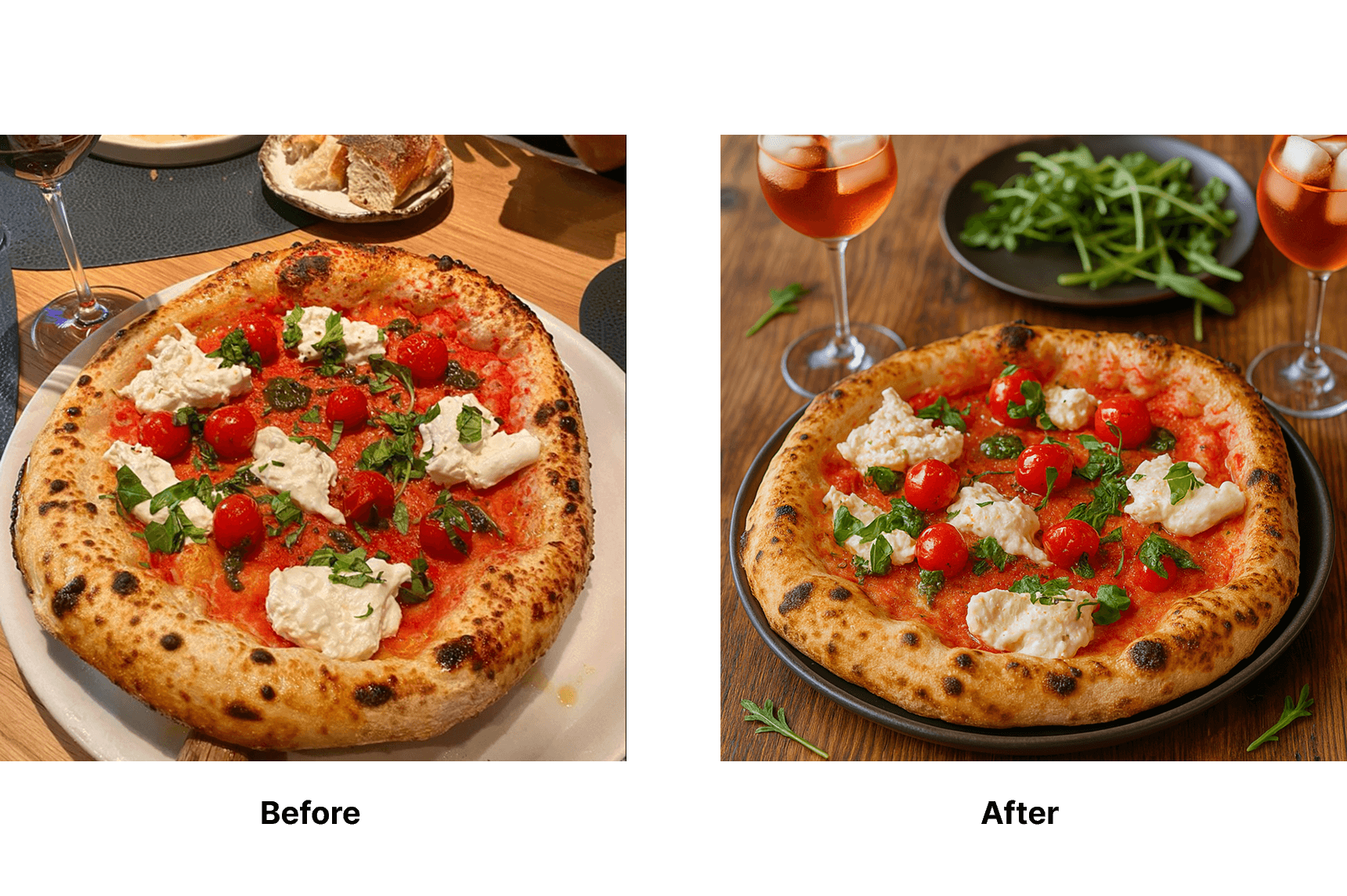
Generated by FoodShot AI
What AI Can and Cannot Do
AI Excels At:
- Menu Photography - Consistent, appetizing shots of individual dishes
- Delivery Platform Images - Optimized for small screens and quick decisions
- Social Media Content - Multiple variations for different platforms
- Quick Updates - New specials, seasonal items, price changes
Traditional Photography Still Wins For:
- Brand Campaigns - Unique creative concepts with models
- Lifestyle Shots - Complex scenes with multiple elements
- Artistic Projects - When you need a specific photographer's style
- Print Advertising - Ultra-high resolution for billboards
The Business Reality
Modern restaurants face unique challenges:
- Frequent Menu Changes - Seasonal items, daily specials
- Multiple Platforms - Website, delivery apps, social media
- Tight Margins - Every dollar counts
- Speed to Market - Can't wait a week for photos
In this environment, the question isn't whether AI food photography is "as good" as traditional – it's whether traditional photography can keep up with modern business needs.
Many successful restaurants now use a hybrid approach:
- Professional shoots for hero images and branding
- AI solutions for daily operations and updates
Making the Right Choice for Your Business
When deciding between traditional and AI food photography, consider these factors:
Choose Traditional Photography When:
- Launching a new brand identity - Need unique creative direction
- Creating print marketing materials - Billboards, magazines require ultra-high resolution
- Complex lifestyle scenes - Multiple models, elaborate setups
- Budget and time are not constraints - Can afford premium photography
Choose AI Food Photography When:
- Updating menus regularly - Seasonal items, daily specials
- Managing multiple locations - Need consistent style across branches
- Working with delivery platforms - Quick turnaround for new dishes
- Tight budget and deadlines - Need professional results fast
The future of food photography isn't about choosing one over the other – it's about using the right tool for the right job. Check our pricing plans to see how affordable professional food photography can be.
Conclusion
The gap between traditional and AI food photography is closing rapidly. While traditional photography still has its place for certain creative projects, AI has become the practical choice for day-to-day restaurant operations.
As competition increases and customer expectations rise, the ability to quickly produce professional food images isn't just nice to have – it's becoming essential for survival in the digital marketplace.
Whether you choose traditional, AI, or a combination of both, the goal remains the same: showing your food in its best light to attract hungry customers.
---
Ready to see the difference? Try AI food photography and transform your first dish in under 120 seconds.